

Many people underestimate the importance of having a diverse stockpile for unexpected emergencies. It's not just about food and water; you'll also need to contemplate first aid supplies, communication tools, and even personal hygiene products to maintain health during a crisis. As you think about your preparedness strategy, you might find yourself questioning what specific items will truly make a difference in a doomsday scenario. Understanding these essentials can greatly influence your ability to cope, but there's more to reflect on than you might initially realize.
Summary
- Stockpile at least one gallon of water per person per day, along with non-perishable food items like canned goods and freeze-dried meals for sustenance.
- Assemble a comprehensive first aid kit with bandages, antiseptic wipes, pain relief medications, and a CPR face shield for emergency health needs.
- Include portable cooking equipment, such as propane stoves and durable cookware, to prepare meals without electricity.
- Prepare communication devices like two-way radios and satellite phones, along with extra batteries and chargers for reliable contact during crises.
- Gather essential documents in a fireproof safe, including legal papers, medical records, and financial documents, for easy access during emergencies.
Water and Water Filtration

When preparing for potential emergencies, securing clean water is essential—aim for at least one gallon per person per day. This isn't just about storing water; it's about understanding effective water purification methods to guarantee you have safe drinking water when needed.
Start by evaluating your emergency water storage options. Stockpile bottled water, but also consider containers that can hold larger quantities. Use food-grade water storage barrels to increase your supply. Make sure to rotate your stock every six months to keep it fresh.
Don't forget about purification methods. Boiling water is one of the most reliable techniques—just bring it to a rolling boil for at least one minute. You can also invest in water filters or purification tablets, which can effectively remove contaminants. UV light purifiers are another great option if you're looking for a portable solution.
Be proactive; know where to source water in case your emergency supply runs low. Rivers, lakes, and even rainwater can be options, but always treat that water before consumption.
Non-Perishable Food Items
After securing your water supply, it's time to focus on stocking up on non-perishable food items. These essentials will keep you nourished and energized during uncertain times. Canned goods are your best friend here. They're shelf-stable and come in various options like vegetables, meats, and soups. Look for low-sodium choices to maintain your health.
Next, consider freeze-dried meals. They're lightweight, easy to prepare, and have a long shelf life. Just add water, and you've got a hot meal ready in minutes. They're perfect for those who want nutritious food without the hassle of cooking from scratch.

Don't forget snacks! Nut butter, granola bars, and trail mix can provide quick energy boosts. Also, think about storing dried fruits and nuts for added nutrition and flavor.
When stocking up, aim for a variety of items that cater to your taste preferences. This will help keep boredom at bay during prolonged situations.
Remember to check expiration dates regularly and rotate your supplies. By preparing wisely now, you'll guarantee you have the fuel you need to maintain your freedom and resilience when it counts the most.
First Aid Supplies

How prepared are you for a medical emergency? In a doomsday scenario, having a well-stocked first aid kit is essential.
Start with various bandage types—adhesive bandages for minor cuts, sterile gauze pads for larger wounds, and elastic bandages for sprains. Each serves a specific purpose in wound care, so don't overlook any.
Include antiseptic wipes to clean wounds and prevent infection. You'll also want antibiotic ointment to apply after cleaning cuts. A pair of tweezers can help remove splinters, while scissors will assist in cutting tape or gauze.
Don't forget pain relief medication like ibuprofen or acetaminophen. They can ease discomfort when medical help isn't available.
Additionally, consider including a CPR face shield and a first aid manual. Knowledge empowers you to act confidently in emergencies.
Lastly, make sure to check your supplies regularly. Replace any expired items and replenish as needed.
With the right first aid supplies, you're not only prepared to treat injuries but also to protect your freedom and well-being when it matters most.
Personal Hygiene Products
In a doomsday scenario, maintaining personal hygiene is essential for your health and morale. You'll want to stockpile a variety of personal hygiene products to keep yourself clean and comfortable. Start with toothbrush options — consider both manual and electric versions, but plan for the possibility of no power.
Don't forget extra toothpaste, as dental health is critical. Biodegradable soap is another must-have. It's environmentally friendly and will help you stay clean without harming the planet. Look for multi-use soaps that can serve for handwashing, body cleansing, and even laundry.
Additionally, include items like toilet paper, wet wipes, and feminine hygiene products, as these will greatly enhance your comfort during tough times. Invest in a good supply of deodorant and an effective razor for personal grooming.
Keep in mind that maintaining your appearance can uplift your spirit. Pack items in waterproof containers to protect them from moisture and deterioration.
Lastly, don't underestimate the power of a clean environment. Stock up on garbage bags for waste disposal. Staying organized and hygienic not only promotes health but also fosters resilience in challenging times.
Flashlights and Batteries

A reliable flashlight is your best friend during a doomsday scenario, providing essential light when darkness falls.
You'll want to evaluate different flashlight types to meet your needs. LED flashlights are popular for their brightness and long battery life, while rechargeable models offer sustainability.
Keep a mix of handheld and headlamps in your supply; headlamps free up your hands for tasks.
When choosing flashlights, think about the beam distance and brightness levels. A higher lumen count will give you better visibility, but it can also drain battery life faster.
Opt for adjustable brightness settings to conserve battery when you don't need maximum output.
Stock up on batteries, too. It's vital to have a variety of sizes, including AA and AAA, as well as specialty batteries for your specific flashlights.
Reflect on investing in solar-powered or hand-crank options that don't rely solely on disposable batteries.
Don't forget to check your flashlights regularly, ensuring they're in working order.
In a doomsday scenario, you can't afford to be left in the dark. Prepare now, and you'll have peace of mind when it matters most.
Multi-Tool and Survival Gear
Equipping yourself with a quality multi-tool is vital for any doomsday preparation. A good multi-tool combines various functions into one compact device, allowing you to tackle multiple tasks without burdening yourself with excess gear.
Look for multi-tool features like pliers, knife blades, screwdrivers, and can openers, as these will cover a range of needs in survival scenarios.
In addition to your multi-tool, consider the different survival gear types you'll need. A sturdy knife is important for cutting and crafting, while a fire starter guarantees you can create warmth and cook food.
A reliable water filter can make a world of difference, providing you with safe drinking water when supplies run low. Don't forget about basic first aid supplies, which can be essential in emergencies.
Clothing and Footwear

Your multi-tool and survival gear won't do you much good without the right clothing and footwear to keep you protected and comfortable. In a doomsday scenario, survival clothing is vital. Look for materials that are moisture-wicking, insulating, and quick-drying.
Layering your clothing is essential; start with a moisture-wicking base layer, add an insulating middle layer, and finish with a waterproof outer layer. This way, you can adapt to changing weather conditions easily.
When it comes to footwear, invest in durable footwear designed for rugged terrain. Your shoes should offer excellent traction and ankle support, as you may find yourself hiking over uneven ground. Waterproof boots are a must if you anticipate wet conditions; they'll keep your feet dry and prevent blisters.
Don't forget accessories like hats, gloves, and scarves, as they can provide additional protection against the elements. Choose colors that help you blend into your surroundings to avoid unwanted attention.
Emergency Blankets
How can something so lightweight make such a difference in survival situations? Emergency blankets are a must-have for your stockpile. These compact, aluminum-coated sheets provide remarkable insulation properties, reflecting up to 90% of your body heat back to you. In extreme conditions, staying warm can mean the difference between life and death.
The emergency blanket benefits go beyond warmth, too. They're waterproof, making them useful for shielding against rain or snow. You can also use them as a makeshift shelter or ground cover. Their versatility is unmatched, which is essential when you're in a pinch.
When you're planning your supplies, consider how easy they're to carry. You can stash several in your bug-out bag without even noticing the weight.
Plus, they're affordable, allowing you to stock up without breaking the bank.
In an unpredictable world, having reliable gear is your safeguard against potential disasters. Don't underestimate the power of these simple tools. By including emergency blankets in your preparedness plan, you're taking a smart, proactive step towards ensuring your freedom and safety when it matters most.
Communication Devices
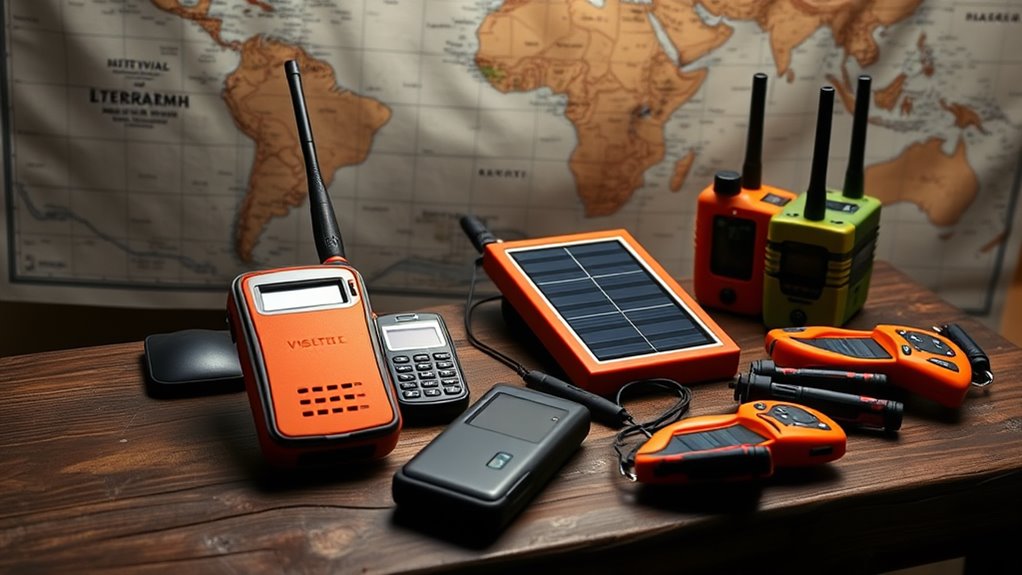
In an emergency, staying connected can be as vital as food and water. You need reliable communication devices to help you coordinate with others and stay informed.
Two-way radios should be high on your list. They allow for instant communication over short distances, making them perfect for keeping in touch with your group. Look for models with good battery life and a range that suits your needs.
Satellite phones are another important tool. Unlike traditional cell phones, they work even when conventional networks fail. This could be your lifeline to the outside world, especially in remote areas. Invest in a model that's durable and has a long-lasting battery.
Don't forget extra batteries and chargers for your devices. In a doomsday scenario, you may not have access to electricity, so consider solar chargers or hand-crank options as backups.
Lastly, practice using your communication devices ahead of time. Familiarity can save precious minutes when you need them most.
Equip yourself with these vital tools, and you'll enhance your chances of staying connected and informed during a crisis.
Cooking Equipment
When preparing for emergencies, having the right cooking equipment is essential. You need gear that's efficient, versatile, and easy to use. Portable stoves are a must-have; they allow you to cook meals anywhere, even without electricity.
Opt for a lightweight model that runs on propane or butane, ensuring you have fuel stocked up as well.
Camping cookware is another vital component. Look for durable, compact pots and pans that can withstand high heat and are easy to clean. Stainless steel or cast iron options are great choices, as they're robust and last long.
Don't forget utensils—spatulas, ladles, and knives should all be included in your kit.
Consider adding a reliable cooler to keep perishables fresh longer. If you can, invest in a solar oven; it's a sustainable option for cooking without fuel.
Finally, think about food storage containers to keep your ingredients organized and safe from pests.
With the right cooking equipment, you'll be prepared to whip up nourishing meals, no matter the situation. Stay self-sufficient and ready to thrive in any scenario that comes your way.
Important Documents

Your significant documents are the backbone of your emergency preparedness plan. Without them, you could face obstacles when trying to regain control after a disaster. Start by gathering essential legal papers, such as birth certificates, passports, and property deeds. These documents serve as proof of identity and ownership, and you don't want to lose them in a crisis.
Next, think about document storage. Invest in a fireproof and waterproof safe to protect these essential records. Keep both physical and digital copies. Scan your documents and store them on an encrypted USB drive, or use a secure cloud service. This way, you'll have access to your information even if your physical copies get damaged or lost.
Additionally, include significant medical records, insurance policies, and financial documents in your collection. Having these on hand can expedite recovery processes and guarantee you receive any necessary aid.
Finally, don't forget to regularly update your document storage, especially when you experience significant life changes, such as marriage or the birth of a child. Maintaining your significant documents is imperative for preserving your freedom and security during uncertain times.
Cash and Barter Items
Having cash and barter items on hand can be a game-changer during a crisis. When traditional payment systems fail, physical cash is crucial. Keep small bills and coins; it's easier to make transactions when you can provide exact change. Cash alternatives, like gold or silver coins, can also hold value and are universally recognized.
Don't rely solely on cash, though. Stockpile barter goods that others may need, such as food, water, medical supplies, and tools. Items like ammunition, hygiene products, and even seeds can be incredibly valuable for trading. Think about what you can offer that could meet someone else's needs.
Consider the community around you. If you know your neighbors well, you might find specific items that are more desirable in your area, like firewood or fuel.
Maintain a balance between cash and barter goods to guarantee you can respond effectively to different situations.
Lastly, remember to keep your items organized and accessible. When a crisis hits, you won't want to waste time searching for what you need. Being prepared with both cash and barter items can empower you to navigate challenges more effectively.
Pet Supplies
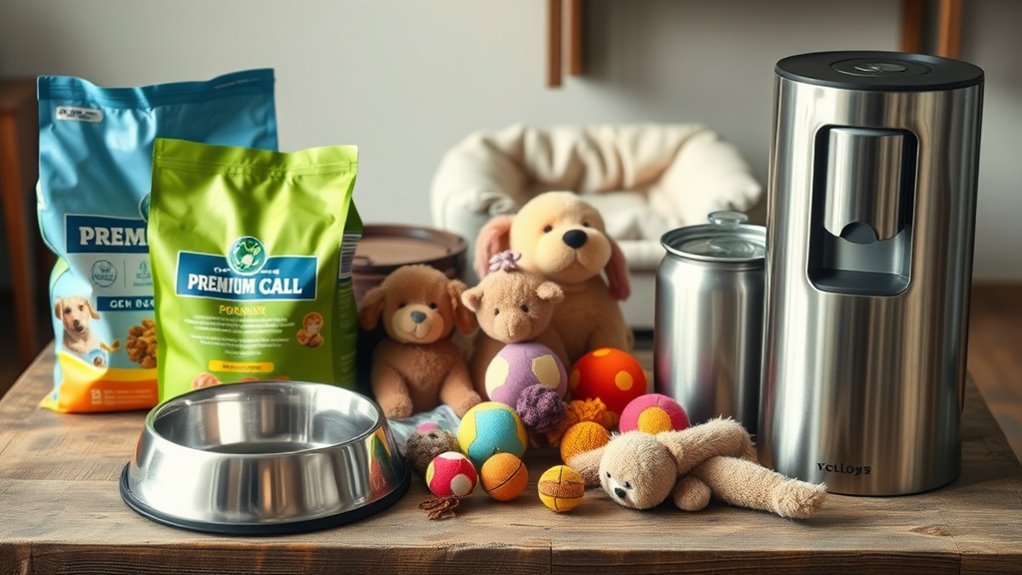
In a crisis, guaranteeing your pets are well-cared for is just as important as stocking up on supplies for yourself. Start by gathering enough pet food to last for at least a month. Focus on high-quality options that meet your pet's nutritional needs.
Don't forget to store some treats for morale; they can be a great comfort during tough times.
Next, stockpile essential supplies like water bowls, leashes, and grooming tools. If your pet requires any medications, make certain you have a sufficient supply on hand.
It's also wise to include a basic first aid kit, complete with items like bandages and antiseptics, to handle minor injuries.
Consider your pet's comfort too. Pack blankets or favorite toys to help ease anxiety.
And while you may not want to think about it, having a plan for emergencies is vital. Identify the nearest emergency vet and keep that information accessible.
Lastly, don't overlook the importance of identification. Guarantee your pets have collars with tags, and consider microchipping them to boost their chances of being reunited if lost.
Taking these steps will help you maintain your freedom and peace of mind during any crisis.
FAQs
How Do I Determine the Amount of Supplies I Need?
To determine the amount of supplies you need, start with a needs assessment.
List essential items based on your lifestyle, family size, and potential emergencies.
Then, use supply calculation to estimate quantities—consider how long you want to be prepared and daily consumption rates.
Factor in space for storage and prioritize versatile supplies.
Regularly review and adjust your inventory to guarantee you're always ready without hoarding unnecessary items.
Can I Use Regular Household Items Instead of Specialized Gear?
When the winds of uncertainty blow, you can harness the power of household substitutions to meet your needs. Instead of specialized gear, look around—your kitchen and garage offer treasure.
A sturdy pot can double as a cooking vessel, while duct tape becomes an improvised tool for repairs. Embrace creativity; it's your ally.
With resourcefulness, you'll transform everyday items into essential supplies, ensuring you're prepared for whatever storms may come your way.
What Are the Best Ways to Store My Supplies?
To store your supplies effectively, start by designating a cool, dry space, like a basement or closet.
Use airtight containers to protect food from moisture and pests.
Label everything clearly for easy access during emergencies.
Consider rotating items regularly to keep stock fresh.
Utilize shelves to maximize space and keep supplies organized.
Prioritizing effective supply storage is a key part of emergency preparedness, ensuring you're ready when it matters most.
How Often Should I Rotate My Stockpiled Items?
You should rotate your stockpiled items regularly to guarantee freshness and safety.
Check expiration dates on your supplies and use those with shorter shelf lives first.
Typically, inspect your stock every six months, but more perishable items may require quarterly checks.
By keeping an eye on shelf life, you'll maintain a reliable supply that won't let you down when you need it most.
Staying proactive helps you stay prepared and independent.
What Skills Should I Learn for a Doomsday Scenario?
When preparing for unexpected situations, it's essential you learn practical skills.
Start with self-defense tactics to protect yourself and your loved ones. Knowing how to handle confrontations can boost your confidence and safety.
Additionally, mastering emergency first aid is important; it equips you to address injuries and medical emergencies effectively.
Both skills not only empower you but also contribute to your overall readiness for any challenges that may come your way.
Conclusion
In a doomsday scenario, being prepared is your best defense. By stockpiling essential supplies like water, non-perishable food, and a solid first aid kit, you're building a lifeline for yourself and your loved ones. Don't forget personal hygiene items and important documents—they're your safety net. With cash and barter items on hand, you'll navigate challenges more smoothly. So, gather your supplies and stand strong; preparation today can turn uncertainty into security tomorrow.


