Can you actually eat leaves to survive? Heck yes! But not just any leaves, alright? You’ve got to know which ones are your friends and which ones will send you packing to the hospital. Spinach and kale? Nutritional powerhouses. Poison ivy? A one-way ticket to misery. Let’s get real—if you’re in a bind, those leafy greens could be your lifeline. So, are you ready to forage wisely and chow down? Hold tight; there’s more to uncover.
Highlights
- Many edible leaves, like spinach and kale, provide essential nutrients necessary for survival and health.
- Foraging for leaves requires knowledge to avoid toxic varieties, such as oleander and poison ivy.
- Historical foraging practices show that ancestral survival relied on correctly identifying and consuming diverse plant species.
- Cooking or blending leaves can enhance their flavor and make them more palatable for consumption.
- Always verify the edibility of leaves before consuming them to prevent health risks.
Understanding Edible Leaves
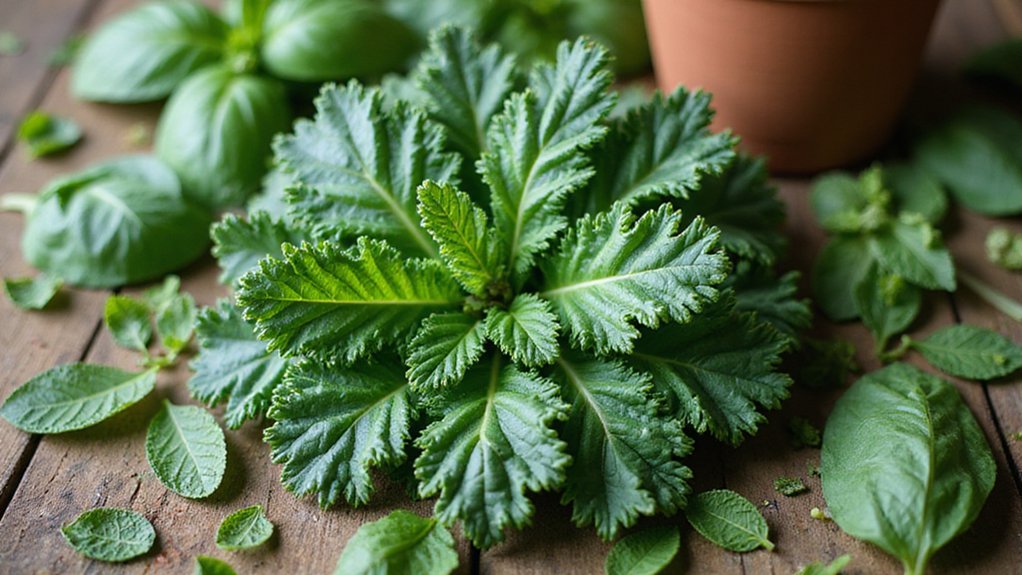
When it comes to edible leaves, not all greens are created equal. You’ve got leaf varieties ranging from spinach to kale, and each one brings its own flair to the table.
Ever tried tossing arugula in a salad? It’s peppery and bold, just like you! Culinary uses? Endless! Wrap them, sauté them, or toss them in a smoothie.
Just don’t munch on random leaves in your backyard—your stomach mightn’t share your adventurous spirit. Stick to the tried-and-true. Additionally, it’s crucial to understand local foraging laws to ensure you’re gathering edible leaves responsibly.
Nutritional Benefits of Leafy Greens
Leafy greens are the unsung heroes of your plate, packing a punch of nutrients that’ll have your body singing their praises.
Seriously, if you’re not munching on kale or spinach, what’re you even doing? These leafy nutrients are like a health superhero squad. They boost your immune system, keep your skin glowing, and even help your heart.
Plus, you get fiber, vitamins, and minerals galore! Why settle for junk when you can feast on nature’s best? Additionally, leafy greens are often paired with snake meat in various culinary traditions, offering a unique combination of flavors and nutrients.

Identifying Toxic Leaves

How do you know which leaves to avoid when foraging or just picking a salad? Let’s be real: toxic plant identification is essential.
Ever heard of common poisonous leaves like oleander or poison ivy? Yeah, you don’t want those in your salad mix! Always check for glossy surfaces, strange smells, or odd colors. If it looks sketchy, don’t eat it. Seriously, trust your gut.
And remember, just because grandma said it’s edible doesn’t mean it is. Google it first! Additionally, familiarize yourself with local flora to enhance your identification skills and avoid potentially harmful plants.
Historical Foraging Practices
Foraging isn’t just a modern trend; it’s a throwback to our ancestors who lived off the land like pros. They didn’t have grocery stores, folks. They relied on traditional methods, gathering leaves, roots, and berries.
Think about it—food was survival, and every leaf held cultural significance. Different tribes had their go-to plants, passing down knowledge like family secrets.
So, when you scavenge for greens today, you’re channeling that ancient wisdom. Ever wondered what your great-great-grandparents munched on? Spoiler: it wasn’t kale smoothies.
Embrace the grit of your foraging heritage, and give a nod to those who knew how to thrive. Understanding basic survival skills can enhance your foraging efforts, ensuring you make the most of what nature provides.
Practical Tips for Leaf Consumption

Ready to plunge into the wild world of leaf consumption? First, get comfy with leaf preparation—wash those greens like they’re your best friend after a mud fight.
Not all leaves are created equal; some are tough and bitter. Try cooking methods like sautéing or steaming to soften them up. Toss in garlic, spices, or whatever you’ve got lying around.
Some leaves can be tough and bitter—sauté or steam them with spices to create a delicious dish!
Feeling adventurous? Blend them into smoothies! Just remember, always double-check if a leaf’s edible—don’t be the hero who mistakes poison ivy for salad. Incorporating a variety of nutrient-rich foods can help ensure you’re getting the necessary vitamins and minerals for survival.
With a little creativity and boldness, you’ll turn those greens into something you actually want to eat.
FAQs
Can All Types of Leaves Be Eaten Raw?
Not all leaves are your snack buddies.
Sure, some are edible and tasty—think spinach and kale—but others can be downright toxic. You wouldn’t want a stomachache or worse, would you? Always check leaf toxicity before munching.
Some poofy plants look cute but pack a punch. So, stick to the known edible varieties. If in doubt, just don’t. Your stomach will thank you later—trust me, it’s not worth the risk!
How Should Leaves Be Stored for Freshness?
Wanna keep those leaves fresh? First, rinse ’em off—no one wants dirt in their salad.
Pat ‘em dry, seriously, moisture’s a killer. Then, toss them in a breathable bag or wrap them in a damp paper towel.
Stash ‘em in the fridge’s crisper drawer—trust me, that’s where the magic happens.
Freshness tips? Don’t overcrowd, and check ‘em daily. Spoiled leaves are a sad sight, and you don’t need that negativity in your life!
Are There Any Cooking Methods to Enhance Leaf Nutrients?
You wanna boost those leafy greens? Try steaming ‘em! It’s like giving your leaves a spa day.
Steam for just a few minutes—don’t overdo it, or they’ll turn to mush.
Sautéing? That’s where the magic happens! Toss in some olive oil, garlic, and a splash of lemon juice.
You’ll get a flavor explosion. Seriously, who said leaves had to be boring?
Spice it up, and your taste buds will thank you!
Can Leaves Be Dried for Long-Term Storage?
Sure, you can totally dry leaves for long-term storage!
Just grab a dehydrator or an oven set on low, and spread those leaves out. Flip ’em after a few hours—don’t just let ‘em sit there!
Once they’re crispy, stash ’em in airtight containers, away from light. Trust me, you want them fresh when you need ‘em.
But, seriously, don’t go munching on just any leaves. Not all of ’em are safe, okay?
What Are the Environmental Impacts of Foraging Leaves?
Foraging leaves? Sure, but let’s talk environmental impact.
If you’re swiping them without a thought, you’re messing with ecosystem balance. Seriously, do you wanna be that person?
Follow foraging ethics—only take what you need and leave the rest. It’s not just about you; it’s about nature, too.
Think about the critters relying on those leaves. So, take a breath, be smart, and respect your leafy friends. They’re living beings, not your personal salad bar!
Final Thoughts
So, can you eat leaves to survive? Heck yes! Just plunge into the greens—spinach, kale, arugula—your new best friends. But don’t be an amateur; know your toxic foes like oleander and poison ivy. Wash ‘em well, cook ‘em right, and you’re golden. It’s a wild world out there, but with a little knowledge and a dash of guts, you can turn those leafy greens into your survival secret weapon. Go on, get munching!