

When it comes to storing carrots long term, you need to contemplate a few key factors to maintain their freshness and flavor. Start by selecting firm, vibrant carrots and preparing them properly to maximize their shelf life. You might be surprised by the various methods available, from refrigeration techniques to using a root cellar. Each option has its own set of advantages, but understanding the ideal conditions can be essential. If you want your carrots to last, you'll need to explore which method fits your lifestyle best.
Summary
- Store carrots in a cool, dark place at temperatures between 32°F to 40°F for optimal freshness.
- Maintain humidity levels around 90% to 95% to prevent wilting and spoilage.
- Trim tops and clean carrots with cool water, avoiding soaking to prevent rot.
- Use methods like refrigeration, freezing, or sand storage to extend their shelf life.
- Regularly inspect stored carrots for decay and remove any that show signs of spoilage.
Understanding Carrot Storage Needs

When it comes to storing carrots for the long haul, understanding their specific storage needs is vital. Different carrot varieties, such as Nantes, Danvers, and Imperator, have unique characteristics that affect how you should store them. For instance, Nantes carrots are sweeter and tend to retain their nutrients better in cold conditions, while Danvers carrots have a more robust flavor that holds up well in varied climates.
To maximize nutrient retention, you'll want to keep your carrots in a cool, dark, and humid environment. Ideal storage temperatures range from 32°F to 40°F (0°C to 4°C). Consider using a root cellar or a refrigerator crisper drawer lined with damp paper towels to maintain moisture without causing rot.
It's important to keep the carrots away from ethylene-producing fruits, like apples, which can accelerate spoilage.
Regularly check stored carrots for any signs of decay, and remove affected ones promptly to prevent the spread. By paying attention to these specific storage needs, you'll make sure that your carrots remain fresh, flavorful, and packed with nutrients for as long as possible.
Embrace this freedom of enjoying homegrown produce throughout the seasons!
Preparing Carrots for Storage
Properly preparing your carrots before storage can greatly enhance their longevity and quality. Start by harvesting carrots at the right time; they should be firm and vibrant in color. Gently pull them from the ground to avoid bruising or breaking.

Once harvested, your next step is cleaning carrots thoroughly. Rinse them under cool water to remove dirt and debris. Avoid soaking them, as excess moisture can lead to rot during storage.
After cleaning, trim the tops about an inch above the carrot. This prevents moisture loss and helps maintain crispness. If you've got any damaged or soft carrots, discard those immediately, as they can spoil the rest.
Once cleaned and trimmed, it's time to dry your carrots gently using a soft towel. Make certain they're completely dry to minimize the risk of mildew.
Finally, consider storing them in breathable containers like burlap bags or cardboard boxes, which allow for airflow. With these steps, you'll make certain your carrots are well-prepared for long-term storage, ready to retain their freshness and taste for months to come.
Ideal Temperature and Humidity

What conditions are best for storing carrots long term?
To keep your carrots fresh and flavorful, you need to focus on the ideal temperature range and humidity levels. Carrots thrive in a cool environment, ideally between 32°F and 40°F (0°C and 4°C). Maintaining this temperature helps slow down the respiration rate, which is essential for prolonging their shelf life.
Humidity plays a significant role too. Aim for humidity levels around 90% to 95%. This high humidity prevents your carrots from wilting, while still allowing them to breathe. If the air's too dry, your carrots could become shriveled and lose that crunch you love.
You can achieve these conditions by using a root cellar, a refrigerator, or even a cool basement, provided it's moist enough.
If you don't have natural humidity, consider placing a damp cloth or a container of water nearby to maintain moisture levels.
Storing Carrots in the Refrigerator
To maximize the freshness of your carrots, storing them in the refrigerator is a practical choice that aligns well with the ideal temperature and humidity conditions. Aim for a refrigerator temperature around 32°F to 40°F (0°C to 4°C), which helps preserve their crispness and flavor.
Before storing, remove any green tops, as they can draw moisture away from the carrots, leading to quicker spoilage. You want to retain as much carrot moisture as possible. Wrap your carrots in a damp paper towel or place them in a perforated plastic bag to maintain humidity while allowing airflow. This balance prevents them from becoming rubbery or slimy.
Keep your carrots in the crisper drawer, where the humidity is typically higher. Avoid storing them near apples or other ethylene-producing fruits, as this can accelerate spoilage.
Regularly check the carrots for any signs of softness or decay, and remove any affected ones to prevent them from impacting the others. By following these steps, you can enjoy fresh, crunchy carrots for weeks, giving you the freedom to savor their flavor in a variety of dishes.
Using a Root Cellar

A well-maintained root cellar can be an excellent solution for storing carrots long term, allowing you to enjoy their flavor and nutrition throughout the colder months. The root cellar benefits are numerous: it maintains a cool, dark, and humid environment, which is ideal for preserving your carrots' crispness and taste.
To set up your root cellar, choose a location that stays consistently cool, ideally between 32°F and 40°F. Digging into the ground or using an existing basement can work well. Guarantee proper ventilation to prevent mold and rot.
You'll want to line your storage bins with damp sand or peat moss, as this helps retain moisture without causing your carrots to spoil.
When placing your carrots in the cellar, remove any damaged or soft ones to avoid spreading decay. Store them upright, with enough space between each carrot to allow for airflow.
Regularly check on your stored carrots, discarding any that show signs of spoilage. With the right root cellar setup, you can enjoy the freedom of having fresh, nutrient-rich carrots at your fingertips all winter long.
Freezing Carrots for Longevity
Freezing carrots is a practical method for preserving their flavor and nutrients long term, especially when you have an abundance from your garden. To get started, you'll need to select the right carrot varieties. While both sweet baby carrots and larger, hearty types freeze well, smaller varieties often retain their crispness better.
Begin by washing your carrots thoroughly to remove any dirt. Next, peel them if you prefer, then chop them into uniform pieces, which helps in even freezing.
Utilize blanching as an essential freezing technique: boil the chopped carrots for 2-5 minutes, depending on their size, then immediately transfer them to an ice bath. This process helps maintain color, texture, and nutrients.
Drain the carrots well, and spread them out on a baking sheet in a single layer to freeze individually. Once frozen solid, pack them into airtight freezer bags or containers, removing as much air as possible.
Label your containers with dates for easy reference. By following these steps, you'll enjoy the fresh taste of your garden carrots long after the growing season ends, giving you the freedom to savor their goodness all year round.
Canning Carrots for Preservation

If you're looking for another effective way to preserve your carrots, canning is a reliable option that can lock in flavor and nutrients for long-term storage.
To start, you'll need to select fresh, crisp carrots. Wash and peel them, then cut them into uniform pieces for even cooking.
Next, you'll want to focus on proper jar preparation. Sterilize your jars by boiling them for at least 10 minutes. This step is essential to prevent contamination.
While the jars cool, prepare your canning method. You can choose between pressure canning or water bath canning, depending on your preference and the type of carrots you're preserving.
Once you've selected your canning method, pack the carrot pieces tightly into the sterilized jars, leaving about an inch of headspace. Fill the jars with boiling water or a brine solution, ensuring the carrots are fully submerged.
Seal the jars with lids and process them according to your chosen canning method's guidelines.
After processing, let the jars cool completely. Check the seals; if they're tight, you've successfully canned your carrots for future enjoyment!
Dehydrating Carrots Effectively
Dehydrating carrots effectively locks in their flavor while extending their shelf life considerably. To start, select fresh, firm carrots. Wash and peel them, then cut them into uniform pieces—this guarantees even drying.
You can use various dehydrating techniques, such as a food dehydrator, an oven set to a low temperature, or air drying in a warm, dry place. If you opt for a dehydrator, set it to 125°F (52°C) and check after 6-8 hours; they should be brittle when done.
Once dried, it's essential to store your carrots properly. Invest in airtight storage containers to keep moisture and light at bay. Glass jars or vacuum-sealed bags work well, allowing you to see your stash while keeping it fresh.
Label your containers with the date of dehydration to track freshness easily.
You can rehydrate these carrots later for soups, stews, or snacks by soaking them in water for about 30 minutes. This freedom to enjoy your carrots year-round, without worrying about spoilage, makes dehydrating a fantastic choice for preserving your harvest.
Keeping Carrots in Sand
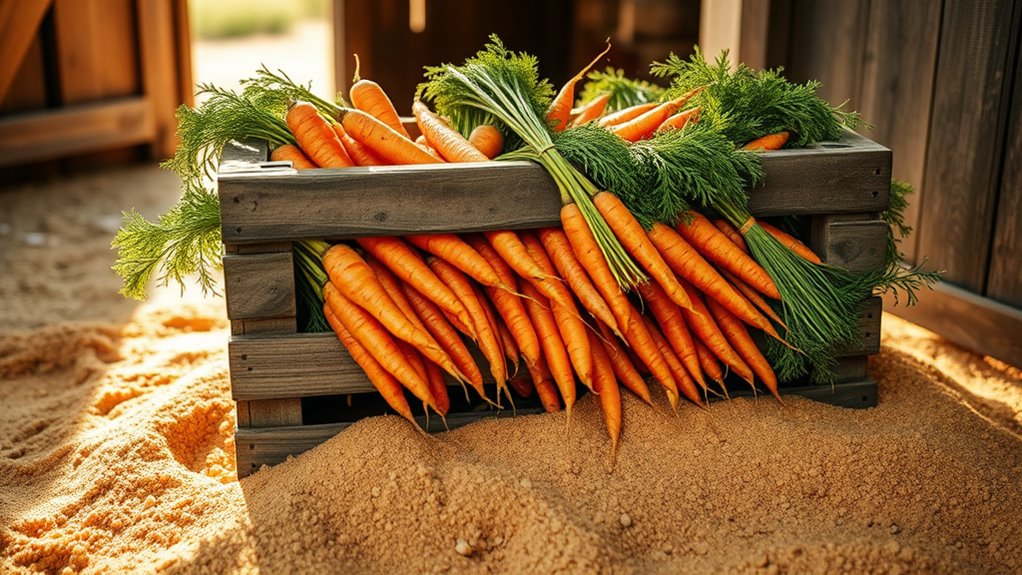
Storing carrots in sand is an old-fashioned method that effectively preserves their freshness and crunch for months. This technique is simple and requires minimal resources, making it an ideal choice for anyone who values freedom from modern conveniences.
To get started, choose a container like a wooden crate or a cardboard box, ensuring it has good sand drainage to prevent water from pooling.
First, select clean, undamaged carrots and trim their tops to about an inch. Layer an inch of clean, dry sand at the bottom of your container. Place a layer of carrots on the sand, ensuring they don't touch each other, and then cover them with more sand, repeating the process until all carrots are stored.
Aim to maintain prime sand moisture; it should be slightly damp but not wet, as too much moisture can cause rot.
Store the container in a cool, dark place, like a basement or an unheated garage. This method allows for excellent ventilation while keeping your carrots crisp.
With proper care, you can enjoy fresh, crunchy carrots well into the winter months, free from the worries of spoilage.
Storing Carrots in Water
One effective way to keep carrots fresh for an extended period is by immersing them in water. This method harnesses the water benefits, allowing the carrots to remain crisp and hydrated while preventing them from drying out.
To start, fill a container with enough water to completely submerge the carrots, ideally in a glass or ceramic bowl. Make sure to trim the tops, as they can draw moisture away from the roots.
When storing, opt for whole carrots rather than cut ones, as they maintain carrot longevity better. You'll want to change the water every few days to keep it fresh and prevent any bacterial growth. If you notice the water becoming cloudy, it's a sign that it's time to replace it completely.
This method not only keeps your carrots crunchy but also preserves their natural flavor and nutrients. By immersing them in water, you're fundamentally creating an environment that mimics their natural habitat, ensuring they stay as vibrant as the day you harvested or bought them.
Enjoy the freedom of having fresh carrots ready to use whenever you need them, all thanks to this simple water storage technique.
Checking Carrot Freshness Regularly

Maintaining the importance of your carrots relies on regular checks for freshness. To guarantee you're enjoying the best quality, familiarize yourself with key freshness indicators. Start by inspecting the color; vibrant orange signifies freshness, while dullness suggests aging. A firm texture is another positive sign; if your carrots feel soft or limp, they're likely past their prime.
Next, pay attention to any spoilage signs. If you notice dark spots or mold, it's time to discard those carrots. A strong, unpleasant odor can also indicate that your carrots have spoiled, so trust your senses.
Regularly examine the storage environment—excess moisture can lead to rot, while too much dryness can cause wilting. Aim to check your carrots at least once a week, adjusting your storage conditions as necessary.
By staying proactive about these freshness indicators and spoilage signs, you'll keep your carrots crisp and flavorful. This approach not only enhances your meals but also supports your desire for freedom in enjoying fresh, nutritious produce whenever you want.
Embrace the habit of checking your carrots, and you'll reap the rewards of vibrant, long-lasting veggies!
Avoiding Common Storage Mistakes
While keeping a close eye on your carrot freshness, it's equally important to avoid common storage mistakes that can compromise their quality. One of the most frequent storage errors is washing carrots before storing them. Moisture can lead to mold and decay, so it's best to keep them dry until you're ready to use them.
Another mistake is storing carrots with other fruits and vegetables. Ethylene gas, released by many fruits, can speed up spoilage. Instead, keep your carrots in a separate, cool, and dark area, preferably in a perforated plastic bag or a container lined with damp paper towels.
Temperature is essential too. Don't store them in the refrigerator door, where temperatures fluctuate. Instead, place them in the crisper drawer for consistent coolness.
Finally, avoid storing damaged or bruised carrots with the healthy ones. Any blemished carrots can lead to rapid spoilage of the others.
Creative Uses for Stored Carrots

Carrots are incredibly versatile and can elevate a variety of dishes while adding essential nutrients to your meals. Whether you're looking for a comforting soup or a sweet treat, stored carrots can be the star ingredient.
Start by whipping up a delicious carrot soup, blending them with onions, garlic, and spices for a warm, hearty dish. For a delightful dessert, why not bake a moist carrot cake? It's a classic that never disappoints.
If you prefer something fresh, toss shredded carrots into a vibrant carrot salad with greens, nuts, and a tangy dressing. Craving a revitalizing drink? Blend carrots into carrot juice or smoothies, adding fruits like oranges or ginger for an extra zing.
For snacking, try making carrot fries—just cut them into sticks, season, and bake until crispy. Looking for dips? Blend cooked carrots with garlic and tahini for a delicious carrot dip that pairs perfectly with crackers or veggies.
Finally, don't forget about carrot pesto; it's a unique twist on the traditional basil version that can elevate pasta or sandwiches. Get creative and enjoy the freedom of cooking with your stored carrots!
FAQs
Can I Store Carrots With Other Vegetables?
You can store carrots with other vegetables, but keep in mind their compatibility.
Carrots do well alongside vegetables like celery and potatoes, as they share similar moisture needs.
Avoid storing them with strong-smelling veggies, like onions, as they can affect each other's flavors.
For ideal vegetable storage, guarantee you maintain proper humidity and temperature.
How Long Do Carrots Last in Different Storage Methods?
When you think about how long carrots last, it really depends on their storage method.
Carrot freezing can keep them fresh for up to a year. If you prefer carrot drying, they can last several months in a cool, dry place.
Just remember, fresh carrots stored in the fridge usually last about two to three weeks.
Are Organic Carrots Better for Long-Term Storage?
When considering organic vs conventional carrots for long-term storage, you'll find organic options may have a slight edge due to fewer pesticides.
However, it's the storage techniques that truly determine longevity. By keeping your carrots in a cool, dark place, or using methods like freezing or canning, both organic and conventional can last long.
Focus on proper storage to maximize their freshness, regardless of the type you choose.
What Are the Signs of Spoiled Carrots?
Have you ever picked up a carrot and noticed it's not as vibrant as it should be? Spoiled carrots often show signs like carrot discoloration, turning from bright orange to a dull or brownish hue.
You'll also feel a soft texture when you squeeze them; fresh carrots should be firm. If they're slimy or have an off smell, it's time to toss them.
Trust your instincts—freshness is key for great flavor!
Can I Store Peeled Carrots Long Term?
You can definitely store peeled carrots long term by freezing them.
Start by washing and peeling your carrots, then cut them into your desired size. Blanch them in boiling water for a few minutes to preserve their color and flavor, then plunge them into ice water.
Once cooled, drain and pack them in airtight containers or freezer bags. This method guarantees your peeled carrot storage remains fresh and nutritious for several months, giving you freedom in meal prep!
Conclusion
Storing carrots long-term is like preparing a fine wine; it requires the right conditions to enhance their natural flavors and longevity. Just as wine thrives in a cool, dark cellar, your carrots will flourish in ideal storage environments. By following these tips, you'll guarantee your vibrant harvest stays fresh and delicious. Regularly check on them like a vintner tending to their barrels, and you'll be rewarded with crisp, sweet carrots ready for your favorite dishes all year round.


