

So, you think you’re ready for a food shortage? Let’s face it—panic buying isn’t a plan. Start by scoping out your pantry. Check those expiration dates because expired food isn’t gonna save you. Next, think non-perishables: rice, beans, canned goods. You want staples that won’t rot in a week. Got a garden? If not, why not? Fresh produce is a game-changer. And hey, ever tried canning? It’s not just for grandmas. Stick around, we’ve got more to cover.
Highlights
- Conduct an inventory of your current food supplies, checking expiration dates and assessing how long they will last.
- Create a long-term food storage plan by listing favorite meals and calculating the necessary quantities of non-perishable staples.
- Focus on stocking up on canned goods, dried legumes, bulk grains, and freeze-dried meals for reliable nutrition.
- Learn basic food preservation techniques such as canning, drying, and dehydrating to extend the shelf life of seasonal produce.
- Develop a sustainable garden using organic techniques, companion planting, and crop rotation to enhance your food security.
Assess Your Current Food Supply
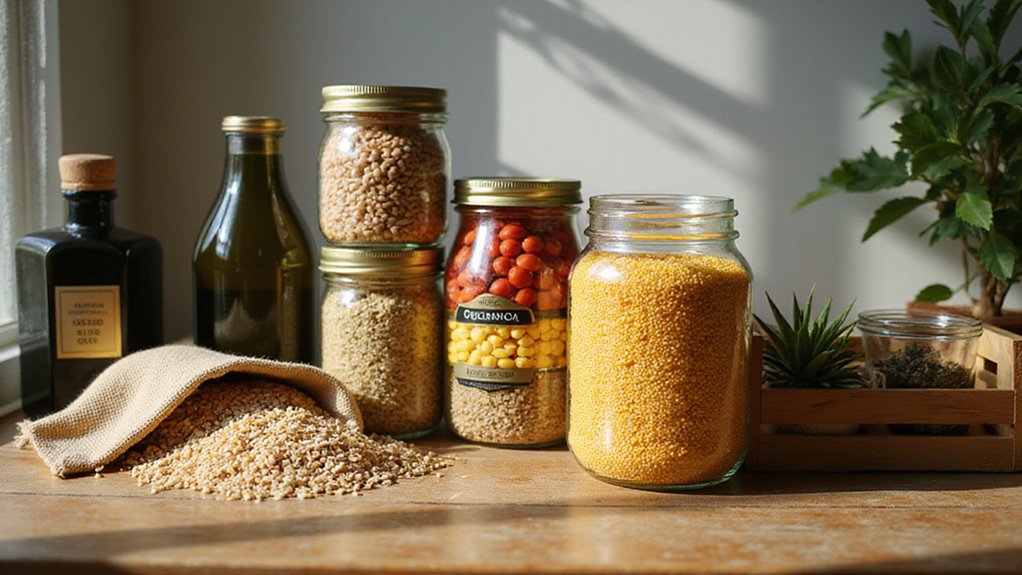
You can’t just sit there, twiddling your thumbs, hoping the grocery store shelves stay stocked. Start by checking your current food supply. Look at what you’ve got. Is it enough?
Do a little inventory management; count cans, boxes, and bags. It’s like a scavenger hunt, but for survival. Don’t ignore expiration dates; they’re not just suggestions!
Count your food supplies like a scavenger hunt for survival—check those expiration dates; they matter!
Think about your supply chain—how long can it last? If you’re light on staples, hit up local farmers or co-ops. Get creative! Mix it up! Consider stocking up on essential food staples to build a solid foundation for your pantry.
And remember, being prepared isn’t paranoid. It’s smart. So, grab that list and get moving! Your future self will thank you.
Create a Long-Term Food Storage Plan
Creating a long-term food storage plan might sound like a chore, but trust me, it’s your ticket to peace of mind when the shelves go bare.
Start by jotting down your favorite meals. Seriously, what do you eat? Next, calculate how much you’ll need for a few months. That’s right—meal planning isn’t just for fancy chefs.

Stock up on staples that won’t rot in a week. Think rice, beans, and oats, not fresh herbs. Rotate your stash like a pro to keep things fresh. Including canned vegetables in your storage will provide essential nutrients during emergencies.
It’s all about being smart and resourceful. Don’t wait till it’s too late—get your food storage game on!
Focus on Non-Perishable Foods
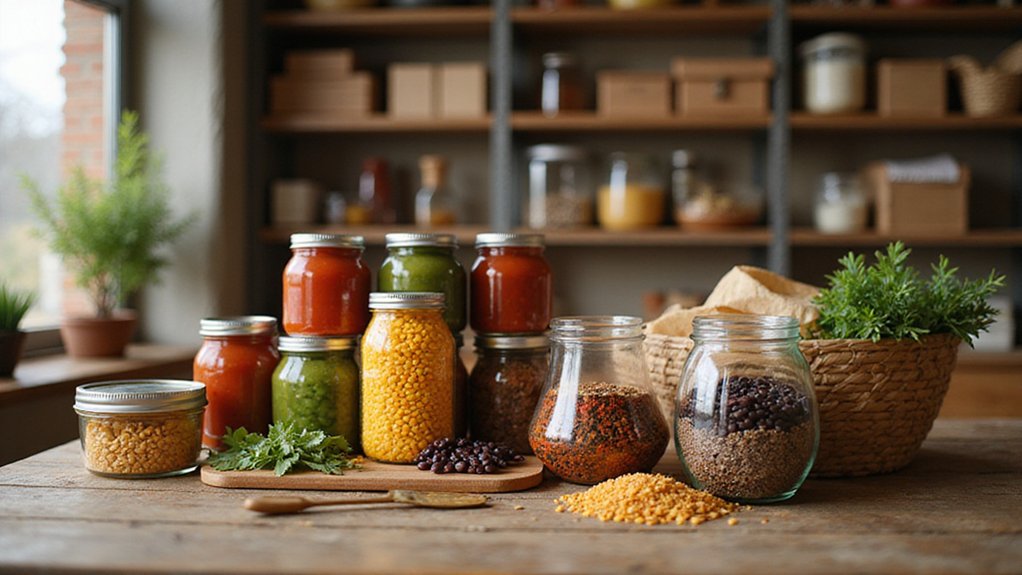
When it comes to food shortages, stocking up on non-perishable foods is a no-brainer. Think about it—canned goods are your best friends.
Stockpile those dried legumes for protein power or grab some bulk grains. Freeze-dried meals? They’re like magic food that lasts forever.
Don’t forget shelf-stable dairy; it’s a game changer for meals. And let’s be real, emergency rations can save your bacon when the going gets tough. Additionally, consider long-term storage solutions to maximize the shelf life of your food supplies.
Learn Basic Food Preservation Techniques
Sure, you might think food preservation is just for grandma, but let me tell you, it’s a game changer. Mastering canning methods is like wielding a magic wand over your pantry.
You wanna keep those summer tomatoes? Get a pressure canner and seal ’em up!
And don’t forget drying techniques—dehydrating fruits and veggies can turn your food into long-lasting powerhouses. Got herbs? Toss ’em in a dehydrator or hang ’em upside down.
It’s fun, it’s practical, and it’ll save your butt when the shelves are bare. Seriously, your future self will thank you. Additionally, understanding meat preservation techniques can significantly enhance your food storage capabilities.
Develop a Sustainable Garden
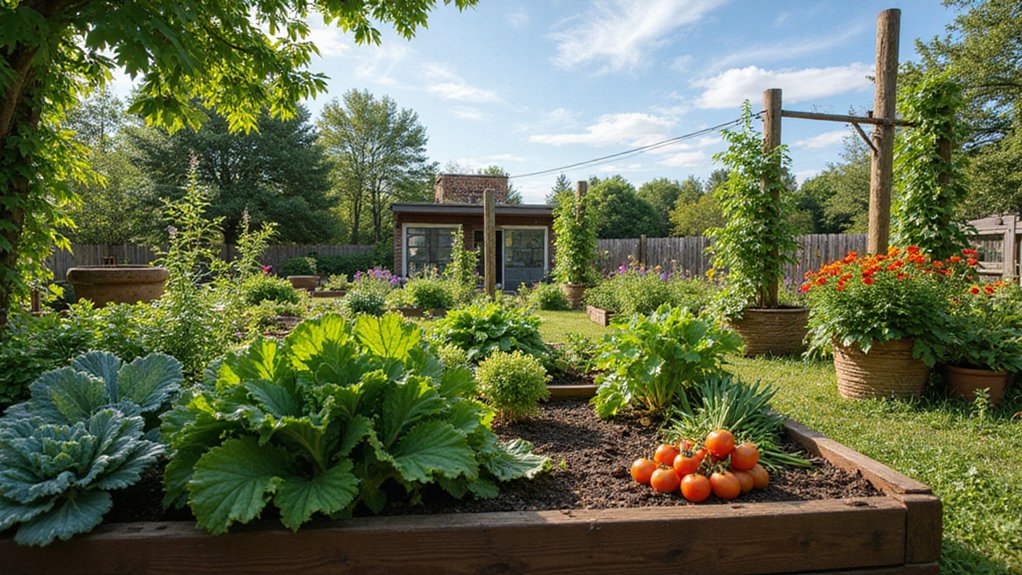
Forget waiting for the perfect moment—now’s the time to dig in and develop a sustainable garden that’ll have you feeling like a food wizard. Seriously, it’s not rocket science.
Start with companion planting; you can pair tomatoes with basil for flavor and pest control. Keep your soil health in check, too—add compost like your garden’s on a health kick. Embrace organic gardening techniques to enrich your soil and create a thriving ecosystem.
Rotate your crops, don’t be lazy! Get your hands dirty and embrace the chaos of nature. You’ll grow food, sure, but also resilience.
Stay Informed About Local Food Resources
How the heck do you stay ahead in a world that can flip on its head faster than a pancake at brunch?
First off, tap into local farmers. They’re your secret weapon. Forget those big-box stores; they’re not your pals during a food crisis.
Get to know your community resources—food banks, co-ops, and farmer’s markets. Sign up for newsletters or social media groups. Stay connected. You’ll get the 411 on fresh produce, deals, and even emergency food supplies.
It’s all about being in the know. Knowledge is power, and you’ll be the one laughing while others scramble. Don’t sleep on this!
FAQs
How Can I Cook With Limited Ingredients During a Food Shortage?
So, you’re staring at your pantry like it’s a black hole? No worries!
Get creative with ingredient substitutions. Got rice instead of pasta? Perfect! Toss everything in one pot—think stir-fry or stews. You’ll save time and dishes.
Spice it up with whatever you’ve got. Don’t have garlic? Use onion or even mustard for a kick!
Embrace the chaos. Cooking’s supposed to be fun, not a chore. You’ve got this!
What Nutritional Supplements Should I Consider for a Balanced Diet?
You want a balanced diet? Grab some vitamin sources like leafy greens and citrus fruits. They’ll keep you zipping along.
For protein options, think beans, eggs, or even canned fish—yes, I said it! Don’t skimp. You can mix and match, but please, no more sad salads!
Supplements can fill gaps too, but real food rules. Just remember, if it’s not colorful, it’s probably not good for you. So, spice it up!
How Can I Barter Food Items With Neighbors During Shortages?
So, you wanna barter food with your neighbors?
First off, get real about what you’ve got. Got extra tomatoes? Trade ‘em for some of their prized potatoes. It’s all about food exchange, baby!
Don’t forget to build community support—people love a good deal and a friendly face.
Start small. Offer a taste test, chat it up, and watch relationships blossom.
Who knows? You might just score that secret stash of chocolate!
What Are the Signs of Food Spoilage I Should Look For?
You wanna know the signs of food spoilage? Check those expiry dates—don’t ignore ’em!
If food’s past its prime, toss it. Mold growth? That fuzzy stuff isn’t a cute accessory; it’s a red flag.
Look for strange smells, colors, or textures. Trust your gut—if it feels off, it probably is. Better safe than sorry, right?
Don’t let spoiled food ruin your day. Stay sharp, stay fresh, and keep your fridge in check!
How Can I Involve My Family in Food Preparation and Preservation?
Want to get your family in on food prep? Make it a game!
Turn family cooking into a fun event. Challenge ’em to create the weirdest dish using what’s in the fridge.
For preservation activities, why not host a pickle party? Everyone can chop, stir, and laugh while bottling their creations.
Trust me, it’ll bond you like nothing else. Plus, who doesn’t want to brag about their homemade pickles?
Get the gang involved!
Final Thoughts
So, there you have it! You’re not just prepping for a food shortage; you’re taking control of your future. Inventory, stock up, preserve, and grow. Don’t wait for the next crisis to hit—be the one who’s ready. Look around, ask questions, and tap into local resources. You’ve got this! Remember, it’s not just about surviving; it’s about thriving when the world gets a little crazy. Now, get out there and make it happen!


