

Is it possible to overestimate the importance of paracord in your bug-out bag? When you're in a survival situation, having the right amount can make all the difference. You might think 50 feet is enough for basic tasks, but what about those unexpected challenges? Understanding how much paracord you truly need not only enhances your preparedness but also guarantees you're ready for anything. Let's explore the ideal lengths and applications that could change your approach to survival gear.
Summary
- A recommended length for paracord in a bug-out bag is between 50 to 100 feet for versatility in various tasks.
- Type III paracord (550 lbs tensile strength) is ideal for survival situations due to its durability and strength.
- Consider the space in your bug-out bag when determining paracord length, balancing between utility and weight.
- Longer lengths allow for multiple uses, while shorter lengths suffice for basic tasks like securing gear or constructing shelters.
- Personal preference for color may also influence paracord choice; consider functionality and psychological effects when selecting.
Importance of Paracord

Paracord is an important component of any bug-out bag due to its incredible versatility and strength. Originating from military applications, paracord was initially designed for parachute suspension lines during World War II. Its history demonstrates resilience and usefulness, evolving into a staple for survivalists, campers, and outdoor enthusiasts alike.
When you consider paracord versatility, it's hard to overstate its potential. You can use it for a multitude of tasks, from building makeshift shelters to securing gear. Its lightweight composition allows for easy transport without adding unnecessary weight to your bag.
In addition, the inner strands can be extracted for various applications, including fishing line, sewing thread, or even emergency tripwires.
In a survival situation, having reliable tools at your disposal is vital. Paracord's strength—capable of supporting up to 550 pounds—ensures you can tackle demanding tasks without concern for breakage. Whether constructing a shelter or creating a tourniquet, its multifaceted nature makes paracord an indispensable asset.
Thus, ensuring you pack enough paracord in your bug-out bag equips you with essential tools for freedom and survival in uncertain conditions.
Types of Paracord
When selecting paracord for your bug-out bag, it's crucial to understand the various types available, as each serves different purposes and functions.

Paracord comes in several paracord varieties, the most common being Type I, Type II, and Type III. Type I is lightweight, with a tensile strength of around 95 pounds, making it suitable for light tasks. Type II can handle up to 400 pounds, providing a balance between weight and durability. Type III, often referred to as 550 paracord, boasts a tensile strength of 550 pounds, making it the go-to choice for most survivalists.
In addition to strength, paracord colors also play a role in your selection. You'll find everything from camo patterns for blending into natural surroundings to vibrant colors that can serve as signal cords in emergencies.
Each color may have its psychological effects, so choose wisely based on your intended use. By understanding these paracord varieties and colors, you can equip your bug-out bag with the right type of paracord to meet your needs effectively, ensuring you're prepared for any situation that requires versatility and reliability.
Common Uses in Survival

Utilizing paracord in survival situations can greatly enhance your preparedness and resourcefulness. This versatile material serves numerous essential functions that can make a significant difference in the field.
One of the primary uses of paracord is in shelter construction. You can use it to secure tarps, build frames, or tie down branches, ensuring you have a sturdy and reliable shelter against the elements.
In addition to shelter, paracord can also be employed as a fishing line. If you find yourself in a survival scenario near water, you can easily separate the inner strands and use them to fashion hooks or lines, enabling you to catch fish for sustenance.
Moreover, paracord is invaluable for creating traps or snares for small game, which can provide essential nutrition. Its durability and lightweight nature make it an ideal choice for various survival tasks, from securing gear to creating makeshift tools.
Length Considerations
Determining the appropriate length of paracord for your bug out bag is essential for maximizing its utility in survival situations. The length measurement you choose can greatly affect your ability to adapt to various challenges. Generally, recommended lengths range from 50 to 100 feet. This guarantees you have enough material for tasks like creating shelters, securing gear, or performing first aid.
When selecting the length, consider your specific needs and the potential scenarios you might face. If you plan to use paracord for multiple purposes, such as rigging a tarp or making a clothesline, opting for a longer length can be beneficial. Conversely, if you're only planning to use it for basic tasks, a shorter length may suffice.
It's also wise to evaluate the space in your bug out bag. Too much paracord can take up valuable real estate, whereas too little can limit your options in critical situations.
Ultimately, aim for a balance that aligns with your individual needs and the weight capacity of your bag. Invest time in determining the right length measurement to guarantee your preparedness and freedom in the wild.
Weight Capacity of Paracord
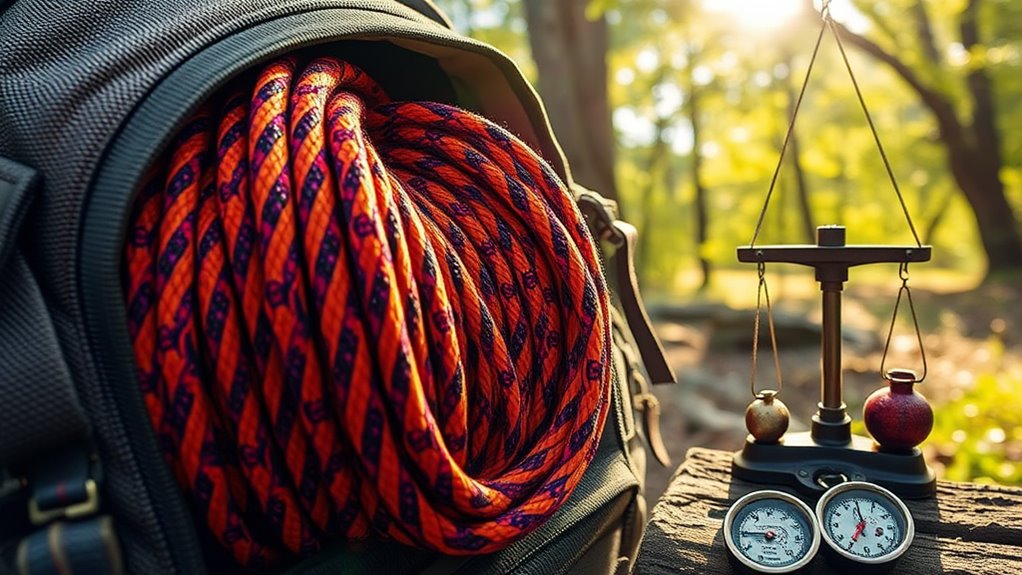
The weight capacity of paracord is an important factor to take into account for your bug out bag. You'll want to understand its weight ratings and tensile strength to guarantee you can rely on it in vital situations.
Paracord typically has a tensile strength of around 550 pounds, making it suitable for various applications, from securing gear to creating shelters.
When choosing paracord, consider the specific tasks you might encounter. For instance, if you're using it for climbing or heavy lifting, it's essential to verify that the weight you plan to support falls well within the paracord's limits.
Remember, while 550 paracord is the standard, there are other types available with different tensile strengths, such as 750 or even 1000 pounds, which could be beneficial depending on your needs.
Always account for the potential for dynamic loads, which could exceed static weights. Knowing how much weight your paracord can handle will give you peace of mind, assuring that you're prepared for emergencies while maintaining the freedom to navigate any situation.
Prioritizing this knowledge can enhance your preparedness and reliability during vital moments.
Packing Strategies
Understanding the weight capacity of paracord is just one part of effectively packing your bug out bag. You need to employ strategic packing methods to guarantee that every item serves a purpose.
Start by categorizing your gear into essentials, tools, and comfort items. This efficient organization not only maximizes space but also allows for quick access during emergencies.
Utilize the vertical space in your bag. You can roll clothing and stuff it into gaps between bulkier items. Consider using packing cubes or zip-lock bags to separate smaller items, which keeps them organized and prevents unnecessary rummaging.
Heavy items should go at the bottom, nearest your back, to maintain balance and stability while you're on the move. Distribute weight evenly across the bag to prevent discomfort.
Lastly, don't forget to attach smaller, frequently used items to the outside of your bag with paracord. This keeps them accessible while preserving internal space.
Prepping for Different Scenarios

When preparing for different scenarios, it's important to tailor your bug out bag to meet specific needs, whether you're facing natural disasters, civil unrest, or wilderness survival. Each scenario demands unique gear and supplies, so understanding your environment is vital for effective urban survival or wilderness survival.
For urban survival, focus on lightweight, compact items. Prioritize self-defense tools, portable water filtration systems, and emergency communication devices. You'll want to include paracord for its versatility—think securing gear or creating makeshift shelters.
Always consider the potential for civil unrest and pack items that can help you navigate crowded areas safely.
In contrast, wilderness survival requires a different approach. Your bug out bag should contain items for shelter-building, fire-starting, and food procurement. Here, paracord becomes invaluable for constructing traps or securing tarps.
Include a reliable first-aid kit and navigation tools, as these are essential when you're away from urban infrastructure.
Ultimately, preparation is about anticipating your needs. By customizing your bug out bag for specific scenarios, you enhance your chance of survival, ensuring you're ready for whatever challenges come your way.
Paracord vs. Other Ropes
Paracord stands out as a superior choice compared to other types of ropes due to its unique blend of strength, flexibility, and lightweight characteristics.
When you consider a durability comparison, paracord typically outperforms standard ropes like nylon or polypropylene in various conditions. Its tensile strength can exceed 550 pounds, making it ideal for heavy-duty tasks without adding unnecessary bulk to your bug-out bag.
Knot strength is another crucial factor where paracord excels. Its construction allows for tight, secure knots that hold under pressure, which is essential in survival scenarios. Regular ropes often slip or weaken when knotted, compromising their effectiveness. In contrast, paracord maintains its integrity even in challenging environments.
Additionally, paracord's versatility is unmatched. You can use it for everything from securing gear to building shelters, while other ropes might've limitations based on their material or intended use.
When you're preparing for emergencies, having a reliable, multi-functional rope like paracord markedly enhances your readiness and freedom to adapt to various situations.
Maintenance and Care

Proper maintenance and care of your paracord can greatly extend its lifespan and performance in critical situations. Start by making sure your paracord stays clean. Dust, dirt, and debris can weaken the fibers over time. For paracord cleaning, simply rinse it in lukewarm water with a mild soap. Avoid harsh chemicals, as they can degrade the nylon. After cleaning, let it air dry completely before storing it.
When it comes to paracord storage, avoid exposing it to direct sunlight for prolonged periods, as UV rays can cause fading and deterioration. Instead, keep your paracord in a cool, dry place, preferably in a zippered bag or a dedicated container to prevent tangling. If you're using paracord frequently, consider coiling it neatly and securing it with a rubber band or Velcro strap.
Regular checks for fraying or damage are essential. If you notice any issues, it's better to replace the affected section rather than risk relying on compromised cord.
Where to Buy Paracord
Finding the right paracord for your bug out bag can be straightforward if you know where to look. Start by checking online retailers, as they often offer a wide variety of paracord types, colors, and lengths. Websites like Amazon, eBay, and specialty outdoor gear sites provide user reviews, making it easier to gauge product quality before purchasing.
Additionally, online retailers frequently run promotions, allowing you to stock up on paracord at competitive prices.
If you prefer a hands-on shopping experience, local stores can be a great option. Hardware stores, craft shops, and outdoor supply stores usually carry paracord in various styles and strengths. This way, you can physically inspect the paracord and feel its texture, ensuring it meets your needs.
Don't hesitate to ask staff for recommendations, as they might offer insights on the best options for your specific requirements.
For the freedom-seeking individual, ensuring your bug out bag is equipped with reliable paracord is essential. Whether you opt for online convenience or local availability, you'll find the paracord you need to enhance your survival readiness.
Additional Gear to Consider

When assembling your bug out bag, considering additional gear is essential for guaranteeing you're prepared for various survival scenarios. Beyond the essentials, think about including emergency tools that enhance your survival capabilities.
A multi-tool can serve multiple functions, from cutting to screwing, while a compact first-aid kit guarantees you're ready for injuries.
Don't overlook fire-starting equipment, such as waterproof matches or a flint striker, which are critical for warmth and cooking. A reliable water filtration system is also a must-have, enabling you to access safe drinking water from natural sources.
Incorporating travel essentials like a portable solar charger can keep your devices powered, facilitating communication or navigation when you need it most. A lightweight tarp or emergency blanket can provide shelter and warmth in unforeseen circumstances, further increasing your resilience.
Lastly, consider including a small fishing kit or snare wire as part of your emergency tools. These can provide sustenance when food supplies dwindle.
Personalization and Customization
Personalizing and customizing your bug out bag is key to ensuring it meets your specific needs and preferences. Start by evaluating what you might encounter during your adventures. Consider incorporating paracord, not just for its utility, but also for its aesthetics. A carefully chosen paracord color can reflect your personality while adding to your bag's overall appearance.
When personalizing your survival gear, think about the specific functions you need. You can create custom attachments using paracord, allowing for easy access to essential items. Use different lengths and styles of paracord to secure gear, create handles, or even fashion a makeshift shelter. This not only enhances functionality but also contributes to your bag's unique look.
Moreover, personalize your bug out bag with patches or insignias that resonate with your values and experiences. This can strengthen your connection to the gear you rely on in emergencies.
Ultimately, customizing your bug out bag isn't just about aesthetics; it's about creating a personalized survival tool that reflects your individuality while preparing you for the unexpected. Remember, a bag that feels uniquely yours can boost your confidence in critical situations.
Real-Life Examples and Stories

Real-life experiences highlight the diverse ways individuals utilize paracord in their bug out bags.
Take, for instance, a survival story from a hiker stranded in the wilderness. He used paracord to construct a makeshift shelter, guaranteeing he stayed dry and protected from the elements. The versatility of paracord allowed him to secure branches together efficiently, showcasing its real-world applications in emergency situations.
Another notable example comes from a prepper who faced a flood. He utilized paracord to create a floating device by tying together empty containers, enabling him to navigate to safety. In this instance, paracord's strength and lightweight nature proved invaluable, demonstrating its necessity in a bug out bag.
Additionally, many outdoor enthusiasts have shared stories of using paracord for fishing lines, crafting snares, or even making emergency tourniquets.
Each of these survival stories reinforces the importance of packing enough paracord. Whether you're setting up a camp, securing gear, or addressing medical emergencies, the versatility of paracord can make a critical difference.
FAQs
Can Paracord Be Used for Fishing or Hunting?
Yes, paracord can definitely be used for both fishing and hunting.
You can fashion a fishing line from paracord by unwinding its inner strands, providing a lightweight and durable option.
For hunting, it's great for creating hunting traps, as its strength can support various setups.
Whether you're setting snares or securing equipment, paracord offers versatility that enhances your self-sufficiency outdoors, helping you stay prepared for any situation.
Is Paracord Waterproof or Resistant to Moisture?
Paracord isn't completely waterproof, but it's resistant to moisture, which enhances its durability.
When you use it outdoors, it can withstand wet conditions without degrading quickly. However, for ideal paracord maintenance, you should dry it thoroughly after exposure to water to prevent mold or mildew.
How Do I Know if My Paracord Is Genuine?
To determine if your paracord is genuine, you can use several paracord identification techniques.
For instance, if you pull apart the strands and find seven inner strands, you're likely dealing with authentic paracord. Genuine paracord features a smooth, consistent texture and a durable outer sheath.
If you notice fraying or inconsistencies, it's probably not real. Investing in quality paracord guarantees you're prepared and ready for any situation that demands reliable gear.
Can Paracord Be Dyed or Colored Easily?
Yes, you can dye paracord using various paracord dyeing techniques, such as immersion dyeing or spray dyeing.
When you choose a dye, consider colorfastness, as not all dyes adhere well to synthetic fibers. Test a small section before committing.
Make certain you follow the manufacturer's instructions for the best results.
What Is the Shelf Life of Paracord?
You might think paracord's invincible, but even the strongest materials have limits.
Paracord's shelf life typically ranges from 5 to 10 years, depending on storage conditions. Its durability diminishes when exposed to UV light and moisture over time.
Knowing this, you can better plan your paracord applications, whether for survival gear or crafting.
Keep your paracord in a cool, dry place to maximize its lifespan and guarantee it's ready when you need it.
Conclusion
In summary, including 50 to 100 feet of paracord in your bug-out bag is essential for versatility in survival situations. Did you know that paracord can support up to 550 pounds of weight? This strength makes it invaluable for shelter construction, gear securing, and crafting tools. By carefully considering the length and weight capacity, you guarantee your bug-out bag is well-equipped for emergencies, enhancing your overall preparedness and survival capabilities.


