
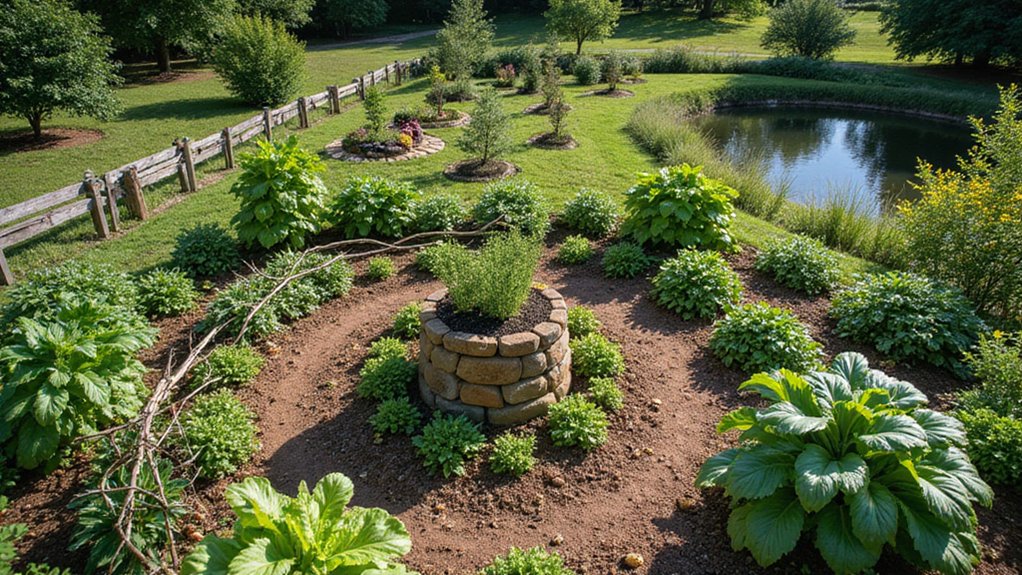
So, you wanna know how big your garden should be to go all-in on self-sufficiency? Well, it ain’t one-size-fits-all, my friend. It’s about you—your family size, what you like to munch on, and how many plants you can keep alive without turning them into a sad, wilted mess. Think 200-400 square feet per person, but let’s get real—how do you make that space work for you? Buckle up; we’re diving into the nitty-gritty.
Highlights
- A family of four typically needs about 200-400 square feet of garden space for basic vegetable self-sufficiency.
- Crop selection should focus on high-yielding and fast-growing varieties to maximize limited space effectively.
- Implementing crop rotation and companion planting can enhance soil health and increase overall productivity in smaller gardens.
- Consider vertical gardening and container options to optimize space and diversify your crop output in confined areas.
- Seasonal planning is essential; grow cold-hardy crops and use preservation methods to ensure food availability year-round.
Assessing Your Dietary Needs
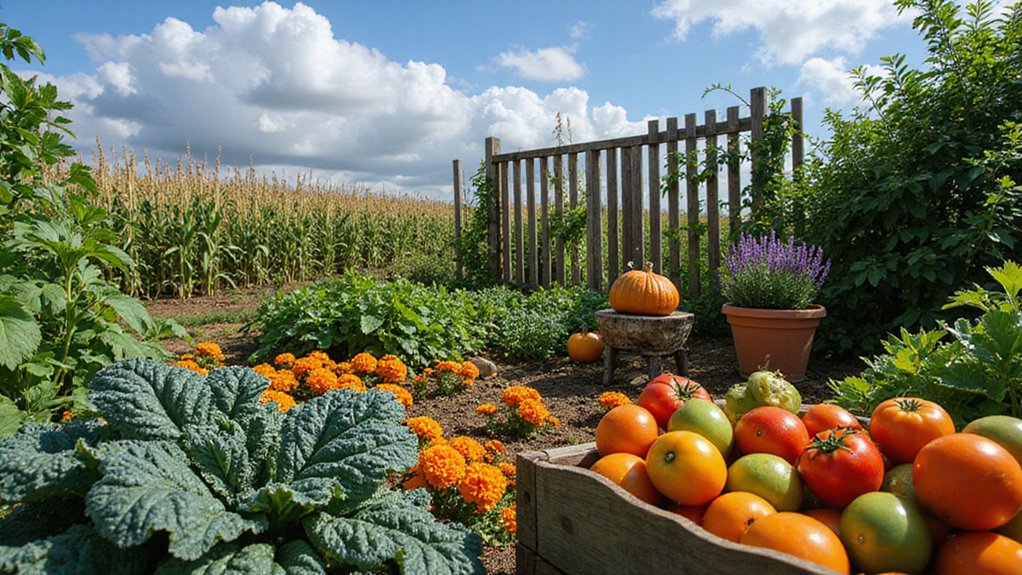
How do you figure out what you actually need to eat? Start by digging into your dietary preferences. Are you vegan, gluten-free, or just a lover of all things cheesy?
Keep your nutritional balance in check, too—protein, carbs, fats. You need ’em all, buddy! Jot down what fuels you, and don’t forget those veggies. Seriously, if your plate looks like a rainbow, you’re on the right track.
Ask yourself, what makes you feel awesome? It’s not just about filling your belly; it’s about thriving. So, get real about what your body craves and plan that garden like it’s your culinary kingdom! Assessing your current situation helps clarify what you can realistically grow and sustain.
Family Size and Garden Space
When it comes to family size and garden space, it’s all about knowing how many mouths you’ve got to feed. Got a crew of five? You’ll need more than a few pots on your balcony.
Think family dynamics—what works for one clan might flop for another. If you’re all about garden sharing, buddy up with neighbors. Pool resources, split the harvest, and save space!
Don’t underestimate how much you can grow together. Plus, sharing the load makes it way more fun. Additionally, consider implementing sustainable practices to maximize your garden’s productivity and ensure a diverse harvest.

Understanding Crop Yields

Understanding crop yields is the name of the game if you want to rock that self-sufficiency life. You need to know how much food you can grow in your space.
Embrace crop rotation like it’s your new best friend; it keeps your soil healthy and boosts yields.
Want yield optimization? Diversify! Mix it up with fast-growing veggies and hearty staples.
Keep track of what works and what flops—failures are just lessons in disguise.
And hey, don’t forget to test your soil! It’s like the secret sauce for your garden’s success. Additionally, consider incorporating nutrient-dense foods into your garden plan to ensure a balanced diet.
Seasonal Growing Considerations
While you might dream of a lush garden overflowing with produce all year round, reality check: seasons dictate what you can grow.
You’ve gotta consider seasonal crops, my friend. What thrives in spring might wither in the frost. Check your climate considerations—know your zone! Don’t waste time on summer veggies if you live where winters bite hard.
Plan your garden like a game of chess, not checkers. Rotate crops, extend your harvest, and use cold frames for those stubborn greens. Incorporate canned vegetables into your storage strategy for a balanced diet during the off-season.
Embrace the rhythm of the seasons; they’re your garden’s heartbeat. Don’t fight it. Work with it, and you’ll reap the rewards!
Choosing the Right Plants
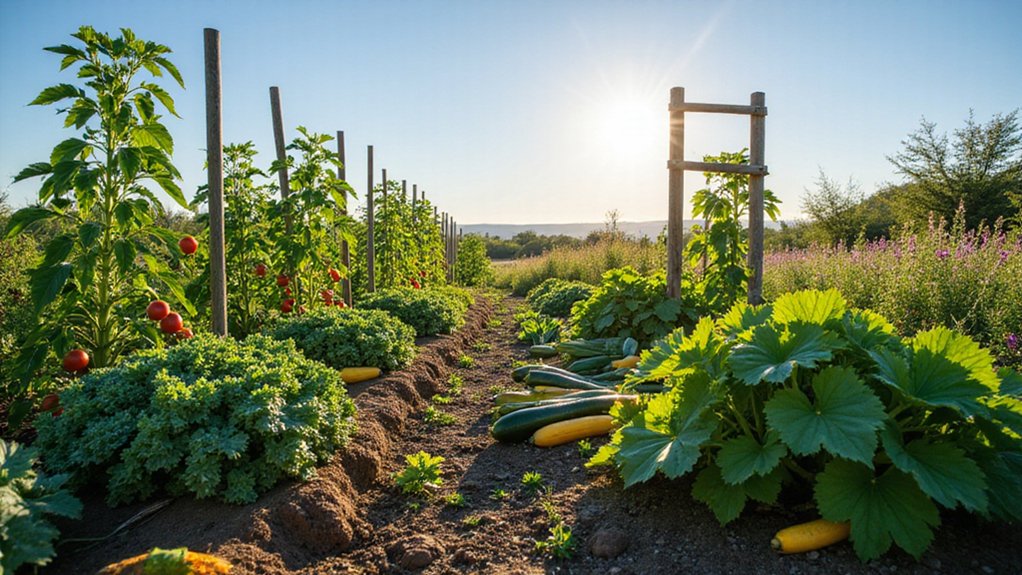
So, how do you pick the right plants for your garden? First, look for perennial plants and heirloom varieties; they’re like the cool kids of the garden—hardy and rich in flavor.
Don’t forget edible flowers for that fancy touch. Native species? Yes, please! They thrive with little fuss.
If space is tight, embrace vertical and container gardening. Focus on drought-resistant and pest-resistant plants.
Plan your planting schedules like a boss; timing is everything. And let’s not skip nutrient-dense crops—they’ll fuel your self-sufficiency dreams. Additionally, consider incorporating urban foraging techniques to discover wild edible plants that can complement your garden.
Choose wisely, and your garden will be your culinary playground. Happy planting!
Space for Livestock and Poultry
Ready to level up your self-sufficiency game? You need space for livestock and poultry, my friend.
Think about livestock housing: it’s got to be sturdy, cozy, and big enough for your animals to move around. You don’t want cramped quarters; that’s just asking for trouble.
As for poultry breeds, choose wisely—some are better for eggs, others for meat. A few chickens can fit in a small yard, but goats or pigs? They’ll need more room to roam.
Soil Quality and Preparation
You can’t plant a garden on just any old dirt and expect it to thrive. Seriously, get real. Start with soil testing—know what you’re working with!
Then, jazz it up with organic amendments. Your plants need love, not landfill leftovers. If drainage’s an issue, find solutions that work; soggy roots are a death sentence.
Keep your pH balance in check; too high or too low? No bueno! Nail down nutrient management like a boss.
And don’t forget cover crops—they’re not just pretty; they enrich the soil. Get your hands dirty and make that dirt sing! Your garden will thank you.
Companion Planting and Efficiency
Your garden’s not just about what you plant; it’s about who’s hanging out with whom. Think of it as a party—some plants are the life of the shindig, while others are wallflowers.
Embrace companion benefits! Pairing plants boosts their growth, fights pests, and even improves flavors. Ever seen tomatoes cozying up to basil? That’s plant diversity working its magic.
Mix it up! Don’t stick to boring rows; let your garden dance. Want more yield? Grow a riot of colors and textures.
Urban vs. Rural Gardening
When it comes to gardening, urban and rural settings can feel worlds apart, yet both have their own wild charm.
In the city, land accessibility’s a joke, but community gardening and urban farming are your golden tickets. Ever tried container gardening? It’s a game changer. Rooftop gardens? Yes, please! You’ll need to navigate those pesky zoning regulations, though. But hey, who doesn’t love a challenge?
In the countryside, you’ve got space optimization on your side. Embrace permaculture principles and go wild!
Planning for Sustainability and Rotation
Planning for sustainability and crop rotation isn’t just a smart move; it’s your secret weapon in the battle against garden burnout. Seriously, who wants to eat the same thing every day? Rotate those crops! It keeps your soil happy and your taste buds tingling.
Embrace sustainable practices like companion planting—your tomatoes and basil will thank you. Don’t just grow; strategize! Use a calendar to map out your planting schedule.
Ask yourself: what thrives together? What’s a no-go? It’s not just gardening; it’s a dance, a chess game! So, roll up those sleeves and get ready to outsmart nature! You got this!
FAQs
How Much Initial Investment Is Needed for a Self-Sufficient Garden?
Alright, let’s get real. Your initial costs for a self-sufficient garden can hit anywhere from a couple hundred bucks to a grand, depending on what you’re aiming for.
You need seeds, soil, tools—don’t skimp! Budget planning isn’t just a suggestion; it’s your survival guide.
Think smart, plan big. You wanna grow food, not debt!
What Tools Are Essential for Maintaining a Self-Sufficient Garden?
You wanna maintain a self-sufficient garden? You’ll need the right garden tools, no doubt!
Grab a sturdy shovel, a hand trowel, and a pair of pruning shears—those bad boys are your best friends.
Don’t forget a hoe and a rake; they’ll keep your maintenance routine tight and tidy.
And hey, a watering can or hose is a must! Seriously, you can’t just wish for plants to thrive.
Get to work, and let’s dig in!
How Do I Manage Pests Organically in My Garden?
Managing pests organically? You’ve gotta get crafty! Start with natural repellents like neem oil or garlic spray—those bugs won’t know what hit ‘em!
Plus, consider companion planting; it’s like a buddy system for your plants. Marigolds with tomatoes? Yes, please! They’ll keep those pesky critters away.
Don’t just stare at your garden; get in there and mix it up. You’ve got this—no need for toxic sprays in your green paradise!
What Are the Best Practices for Preserving Harvested Food?
Wanna preserve your harvest? You’ve gotta get your game face on.
First, immerse yourself in canning techniques—think jars, boiling water, and a little patience. You can’t just wing it!
Next, rock those drying methods; hang herbs upside down, or grab a dehydrator. It’s like a science experiment, minus the goggles.
Don’t forget to label everything, or you’ll end up eating mystery pickles. Trust me, nobody wants that.
Get it done, and savor those flavors!
Can I Grow a Self-Sufficient Garden in a Small Space?
You bet you can grow a self-sufficient garden in a tiny space! Embrace container gardening like it’s your new bestie.
Grab pots, buckets—anything that holds soil. Pair that with vertical gardening; think shelves, trellises, and hanging planters. You’ll maximize every inch!
You don’t need a sprawling estate; you just need creativity and a dash of grit. So, roll up those sleeves, and let’s turn that small patch into a food factory!
Final Thoughts
So, how big do you want your garden to be? It’s not just about square footage; it’s about your lifestyle, your cravings, and your family. You’re aiming for that green-thumb magic, right? Remember, you can grow a ton in a small space—potatoes in containers, herbs on windowsills. Don’t overthink it! Just dig in, plant what you love, and watch your mini-farm flourish. You got this! Get out there and show Mother Nature what you’re made of!


