
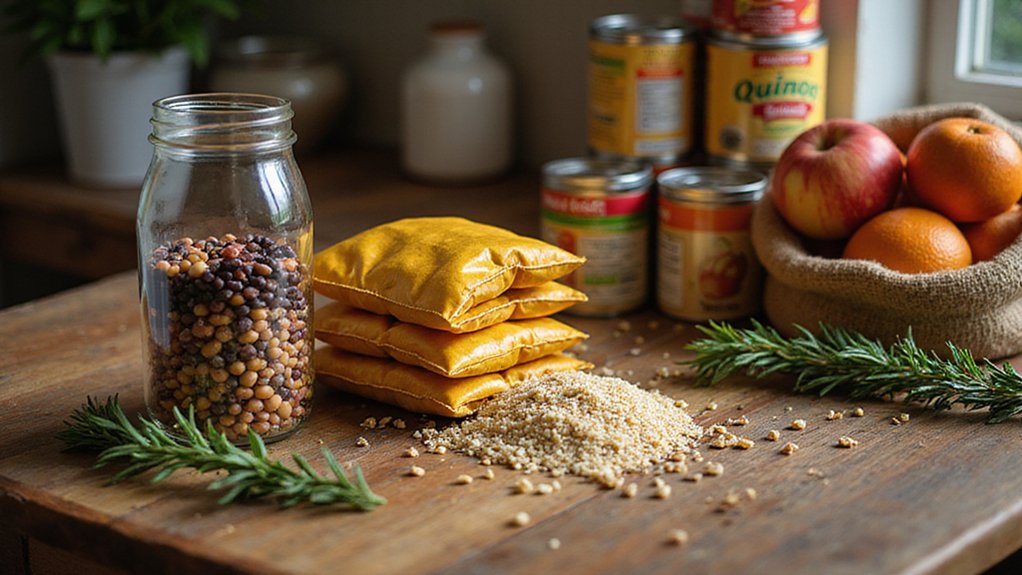
So, you’re looking to stockpile food for the long haul? Smart move! Canned goods are your best friend—easy to grab, hard to mess up. Grains and legumes? They pack a serious nutritional punch. And let’s not forget freeze-dried delights that last longer than your last relationship. But what about snacks? Dehydrated fruits and veggies can save your sanity. Stick around; the secrets to making your stash last even longer are coming up next.
Highlights
- Canned goods offer long shelf stability and instant nutrition, making them ideal for unexpected meals or snacks.
- Grains and legumes are nutrient-dense, providing fiber and protein with excellent long-term storage potential.
- Freeze-dried foods are lightweight and flavorful, lasting for years without spoilage and quick to prepare.
- Dehydrated fruits and vegetables are healthy, portable snacks that retain nutritional benefits and are safe for long-term storage.
- Proper storage methods, such as airtight containers and temperature control, enhance the longevity of all food types.
Canned Goods: A Pantry Staple

Canned goods are your best friends in the pantry—no joke.
Think about it: those canned varieties are practically immortal! With their shelf stability, you can stash them away and forget about them, but they’ll always be there when hunger strikes.
Canned goods are like pantry superheroes—always ready to save the day when hunger hits!
Need a quick meal? Pop open a can of veggies or beans, and voilà! Instant nutrition.
Don’t underestimate their power; they’re not just for survivalists. A well-stocked pantry means you’re ready for anything—unexpected guests or your own late-night munchies. Additionally, many canned foods can last for many years if cans are intact, making them a reliable choice for long-term storage.
Grains and Legumes: Nutrient-Dense Options
When it comes to long-term storage, grains and legumes are like your pantry’s power couple. Seriously, they’re nutrient-dense, packing a punch with fiber, protein, and essential vitamins.
Think quinoa, lentils, and black beans—cooking versatility at its finest! You can toss them in soups, whip up salads, or even make killer veggie burgers. They’ll keep you full and satisfied, no matter what mood you’re in.

Plus, they store like champs, lasting for years if kept dry and cool. Dried beans can be a fantastic option as they are packed with nutrients and have a long storage potential. So, why not stock up? Your future self will thank you—trust me, you’ll want these goodies on hand when hunger strikes!
Freeze-Dried Foods: Lightweight and Long-Lasting

Forget everything you think you know about food storage—freeze-dried foods are where the magic happens.
Imagine lightweight meals stashed in your pantry, ready to save your taste buds and sanity. The freeze dried benefits? They pack a flavor punch and last for years, without turning into science experiments.
You can whip up delicious freeze dried meals in minutes—just add water! Perfect for camping, emergencies, or just lazy nights.
Seriously, who wants to waste time cooking when you can enjoy a gourmet meal with zero effort? Don’t sleep on this—make freeze-dried your go-to for long-term storage. Properly stored dehydrated foods can last 1 to 25 years depending on the method and packaging used.
Your future self will thank you!
Dehydrated Fruits and Vegetables: A Healthy Snack
Dehydrated fruits and vegetables are a game changer, especially when you’re looking for healthy snacks that won’t go bad in a week.
Seriously, who wants to waste perfectly good food? These dehydrated snacks pack a punch, bursting with nutritional benefits like fiber and vitamins.
Grab some apple chips or dried bell peppers, and you’re in for a treat! They’re portable, tasty, and oh-so-versatile.
Want a quick pick-me-up? Munch on these instead of that sad bag of chips. You’ll feel better, and your body will thank you. Additionally, drying methods like air drying or dehydrating inhibit bacterial growth by removing moisture, making these snacks not only delicious but also safe for long-term storage.
Storage Tips for Maximizing Shelf Life

You might think storing food is a no-brainer, but trust me, there’s an art to it.
First, let’s talk proper packaging. Airtight containers or vacuum-sealed bags are your best friends. Toss out those flimsy boxes!
Next up, temperature control. Keep your stash cool, dark, and dry. No one wants a moldy surprise! Check your pantry—heat and moisture are like that annoying sibling; they ruin everything.
Rotate your stock regularly, and don’t forget to label each item with dates. You want to eat, not play a guessing game. Additionally, implementing a tracking system for your inventory can greatly enhance your food management.
Follow these tips, and your food will thank you—trust me.
FAQs
How Should I Rotate My Food Storage Inventory?
You’ve gotta keep your food rotation tight, my friend. Start with the oldest stuff first—those cans ain’t gonna eat themselves!
Label everything with dates; it’s like a cheat sheet for your inventory management. When you add new items, shove ’em to the back. Trust me, you don’t want expired surprises.
And remember, check your stash regularly. Spoiled food is a tragedy. Keep it fresh, keep it organized, and you’ll thank yourself later!
Can I Store Food in My Garage?
You can totally store food in your garage, but watch that garage temperature and humidity control!
If it’s too hot or damp, your food’s gonna spoil faster than a forgotten lunch. Aim for a cool, dry spot.
Got an uninsulated garage? Better think twice before stashing your precious supplies.
Trust me, you don’t want your emergency stash becoming a science experiment.
What Containers Are Best for Long-Term Storage?
Wanna store stuff right? Glass jars are your best buddies. They’re airtight, keep things fresh, and look kinda classy.
But don’t sleep on vacuum sealers—they’re the real MVPs for keeping your food safe from the elements. Seriously, who wants stale snacks? Just seal, label, and stash ‘em away.
Be bold! You’ll thank yourself later when you’re munching on perfectly preserved goodies, instead of tossing out moldy messes. Trust me, you got this!
How Do I Check Food for Spoilage?
Check for spoilage like a detective on a mission!
Look for spoilage signs—mold, weird smells, or that “I’ve been sitting here too long” vibe. Expiration dates? Don’t ignore ‘em. If it’s past, toss it!
Got canned goods? Dents or bulges? Bye-bye! Trust your senses; if it looks, smells, or tastes off, it probably is.
Are There Specific Foods to Avoid for Long-Term Storage?
You wanna avoid specific foods for long-term storage? Let’s get real.
Canned meats? Sure, they last, but are they appetizing after a year? Nope.
And freeze-dried fruits? A solid choice, but steer clear of anything with added sugar or weird preservatives.
Trust me, you don’t want a science project in your pantry.
Stick to simple, wholesome options. Your future self will thank you when you’re not munching on a soggy mess!
Final Thoughts
So, you wanna stock up for the long haul? Smart move! Canned goods, grains, legumes, and freeze-dried delights are your best buddies. They’ll keep you fed, happy, and ready to tackle whatever life throws at you. Just remember, store ’em right and rotate that stock like you’re in a grocery game show. Don’t let your food go stale—nobody likes a sad pantry. Embrace the prepper within you, and get ready to thrive, no matter what!


